
 Image 1 of 2
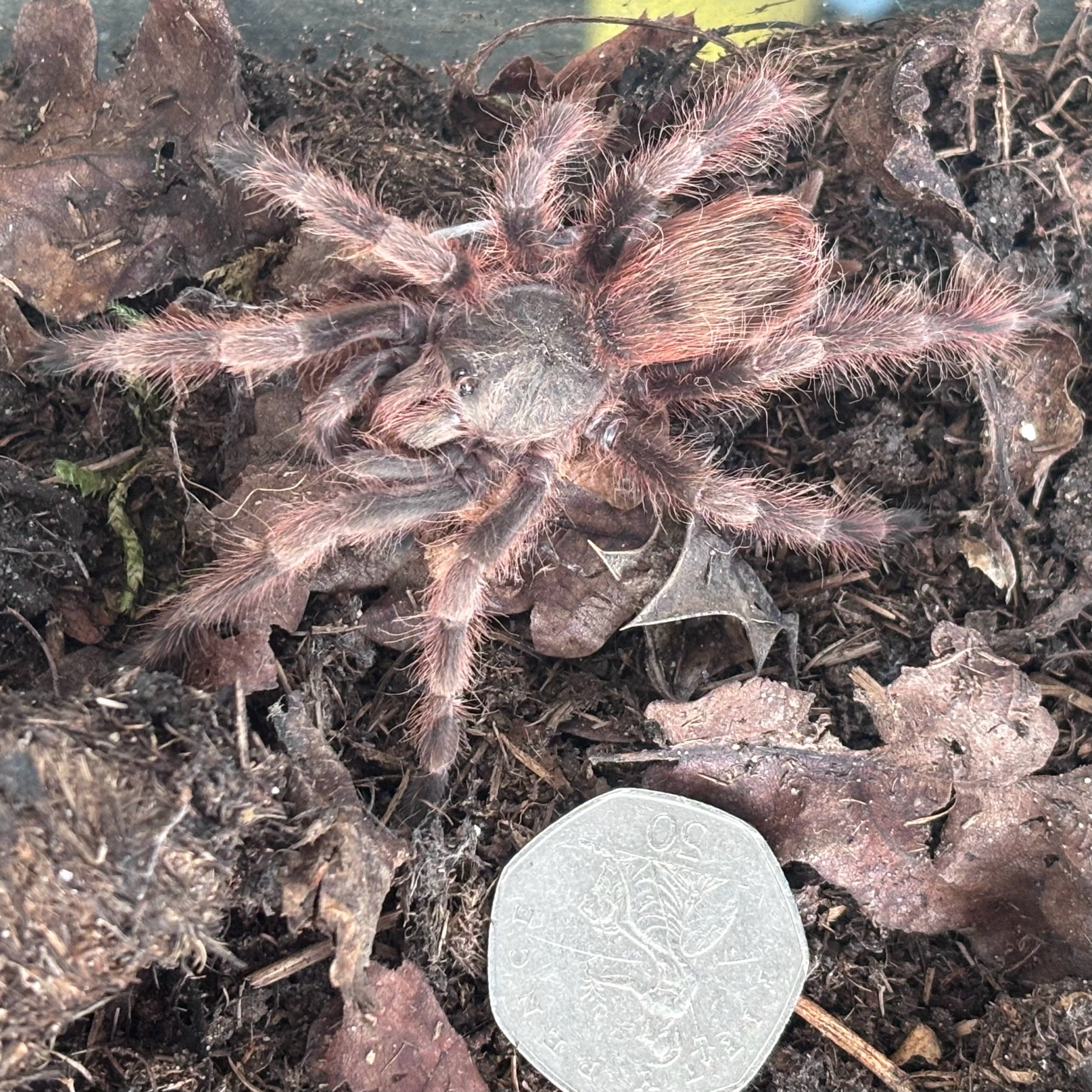 Image 2 of 2
Species Information
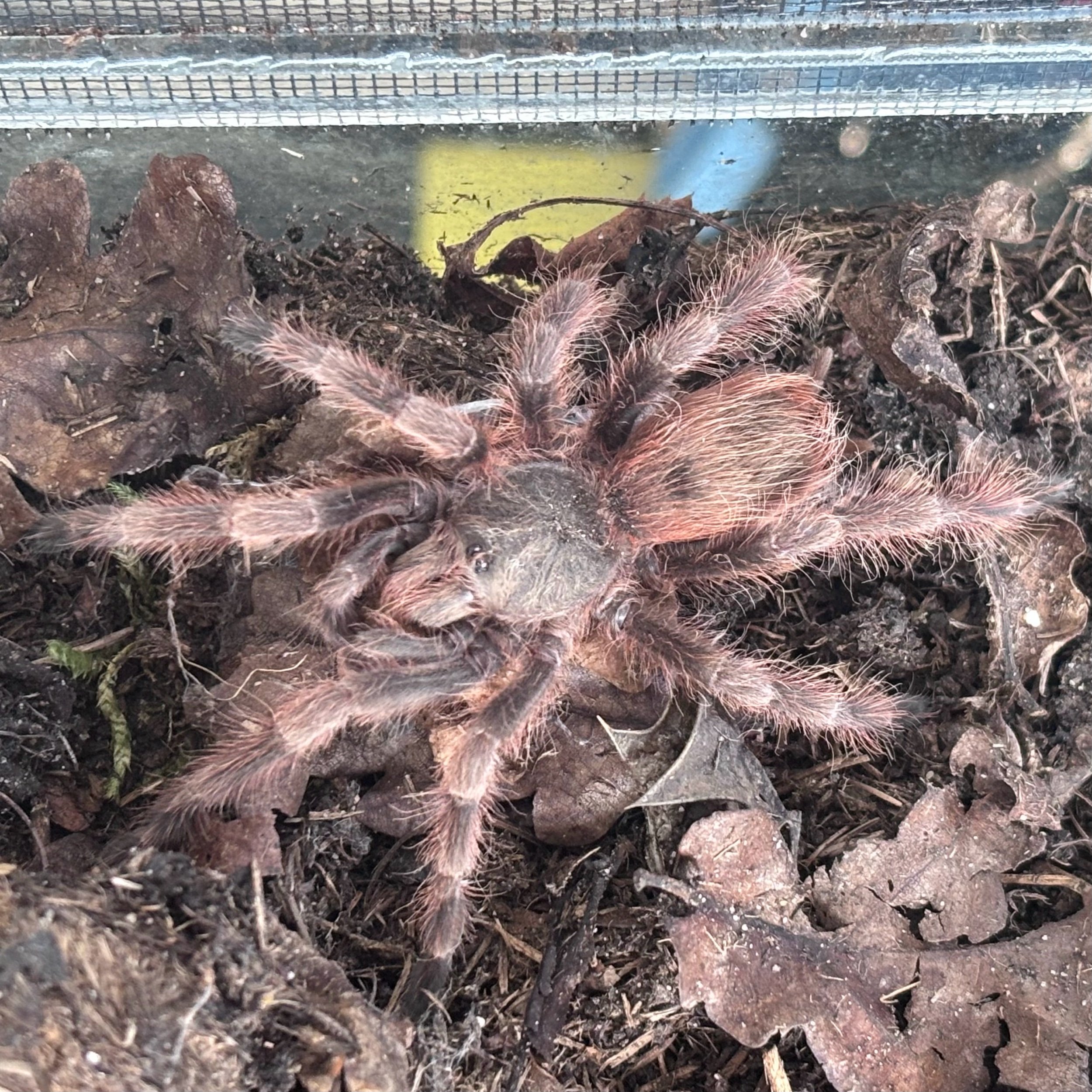
Common Name: Brazilian Giant Blonde
Scientific Name: Nhandu tripepii
Temperament: Defensive, fast-moving, may flick hairs
Average Adult Size: 18–22cm (7–9 inches) leg span
Average Lifespan: Females 15–20+ years; Males 4–6 years
Photos taken: 21.3.26
This sweetpea comes with a 30x30cm glass tank
Current Care
Enclosure:
A terrestrial setup with ample floor space is essential. Provide a deep substrate to allow for burrowing behaviour.
Temperature:
Daytime: 24–28°C
Night: 20–22°C
Humidity:
60–70%—slightly higher than arid species. Maintain moderate humidity with good ventilation. Avoid overly damp conditions.
Furnishings:
Cork bark hide or similar shelter
Minimal climbing décor (this is a ground-dwelling species)
Deep substrate (8–12cm) for digging
Good airflow to prevent stagnant conditions
Substrate:
Coco fibre, topsoil, or a soil mix, kept slightly moist (especially in one area)
Feeding:
Feeding well on:
Appropriately sized crickets
Locusts
Dubia roaches
Food is offered regularly to support steady growth and hydration.
Additional Notes
Active, healthy, and feeding consistently
Fast-growing, large terrestrial species
Can be defensive—best suited to keepers with some experience
A great choice for those wanting a sizeable display tarantula
Photos and videos available upon request
Collection Only
Due to the sensitive nature of invertebrates and current cold weather conditions, we are not offering courier delivery at this time.
Collection from the shop is available and strongly recommended to ensure the safety and welfare of the animal.
Species Information
Common Name: Brazilian Giant Blonde
Scientific Name: Nhandu tripepii
Temperament: Defensive, fast-moving, may flick hairs
Average Adult Size: 18–22cm (7–9 inches) leg span
Average Lifespan: Females 15–20+ years; Males 4–6 years
Photos taken: 21.3.26
This sweetpea comes with a 30x30cm glass tank
Current Care
Enclosure:
A terrestrial setup with ample floor space is essential. Provide a deep substrate to allow for burrowing behaviour.
Temperature:
Daytime: 24–28°C
Night: 20–22°C
Humidity:
60–70%—slightly higher than arid species. Maintain moderate humidity with good ventilation. Avoid overly damp conditions.
Furnishings:
Cork bark hide or similar shelter
Minimal climbing décor (this is a ground-dwelling species)
Deep substrate (8–12cm) for digging
Good airflow to prevent stagnant conditions
Substrate:
Coco fibre, topsoil, or a soil mix, kept slightly moist (especially in one area)
Feeding:
Feeding well on:
Appropriately sized crickets
Locusts
Dubia roaches
Food is offered regularly to support steady growth and hydration.
Additional Notes
Active, healthy, and feeding consistently
Fast-growing, large terrestrial species
Can be defensive—best suited to keepers with some experience
A great choice for those wanting a sizeable display tarantula
Photos and videos available upon request
Collection Only
Due to the sensitive nature of invertebrates and current cold weather conditions, we are not offering courier delivery at this time.
Collection from the shop is available and strongly recommended to ensure the safety and welfare of the animal.